Selective estrogen receptor modulators, or SERMs, show up in both medical research and fitness conversations. They act on estrogen receptors in a tissue-specific way. This means they can block estrogen effects in some areas and support them in others. You see them in clinical treatment for breast cancer, osteoporosis, and infertility. You also see them discussed in physique forums and sports science channels.
This guide covers the essential facts you need to know. You will learn how SERMs work, where they are used, the risks, the research, and the biggest mistakes people make when talking about them.
What SERMs Are and How They Work
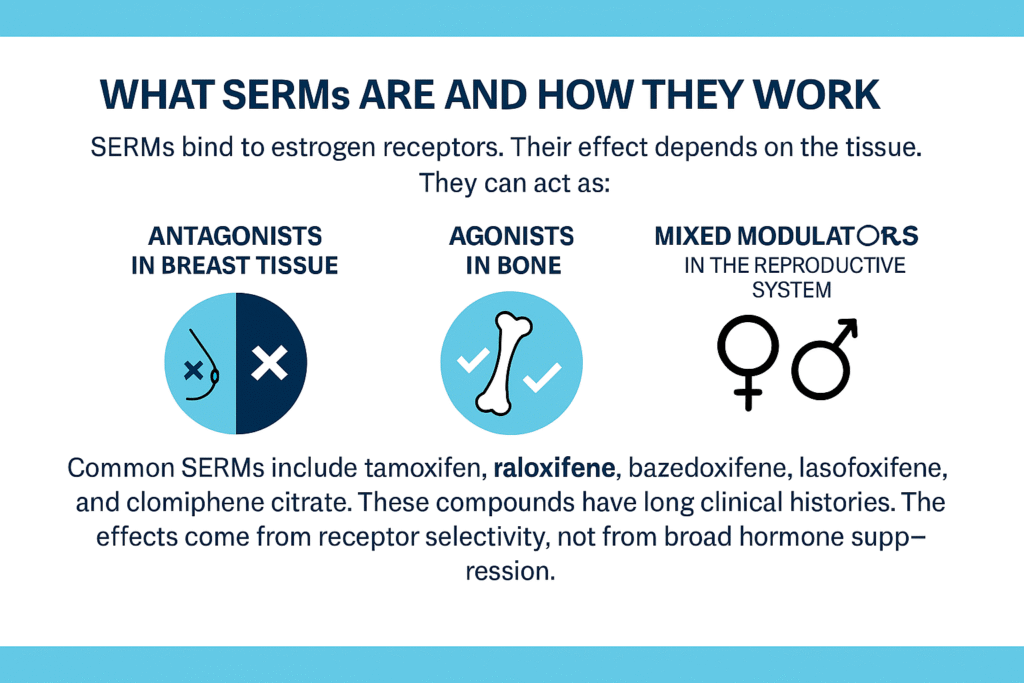
SERMs bind to estrogen receptors. Their effect depends on the tissue.
They can act as:
- Antagonists in breast tissue
- Agonists in bone
- Mixed modulators in the reproductive system
Common SERMs include tamoxifen, raloxifene, bazedoxifene, lasofoxifene, and clomiphene citrate. These compounds have long clinical histories. Their effects come from receptor selectivity, not from broad hormone suppression.
1. SERMs Are Tissue-Selective
SERMs do not block estrogen everywhere. They act differently in each tissue.
This selectivity helps support bone, reduce breast cancer risk, and change signaling in the hypothalamic pituitary axis.
2. SERMs Play a Major Role in Breast Cancer Prevention and Treatment
Tamoxifen and raloxifene reduce invasive estrogen-receptor positive breast cancer risk. They are standard tools in clinical oncology. These uses involve strict monitoring and multi-year plans guided by specialists.
3. SERMs Support Bone Health
Raloxifene improves bone mineral density in postmenopausal women and reduces vertebral fracture risk. It does this without the same endometrial stimulation seen with tamoxifen.
4. SERMs Influence Ovulation
Clomiphene citrate induces ovulation by changing feedback signals in the brain. It increases the release of LH and FSH. These cycles require ultrasound checks and hormonal monitoring.
5. SERMs Carry a Real Risk of Blood Clots
Venous thromboembolism is a known risk. Factors like age, smoking, long flights, and past clots increase this risk. Raloxifene has a boxed warning. Tamoxifen also raises the chance of DVT and PE.
6. Some SERMs Affect the Uterus
Tamoxifen can stimulate the endometrium. This raises the risk of hyperplasia and cancer. Raloxifene does not share this issue to the same degree.
7. SERMs Can Trigger Hot Flashes and Mood Changes
Users report hot flashes, fatigue, poor sleep, and mood shifts. Some people report changes in libido. These effects often appear early and vary by individual.
8. Ocular and Liver Concerns Exist
Tamoxifen can cause rare retinal changes. Some SERMs can raise liver enzymes. Medical programs include periodic monitoring to track these issues.
9. The Best SERM Depends on the Goal
Choosing the right compound matters.
Examples:
- Tamoxifen for ER positive breast cancer across age groups
- Raloxifene for bone health in postmenopausal women
- Clomiphene for ovulation induction under specialist care
10. Off-Label Use in Fitness Comes With Gaps
Fitness forums often mention SERMs in recovery plans or hormonal discussions. These conversations overlook clinical supervision, lab work, and risk screening. Sports medicine experts note that unsupervised use can miss important signs of clotting, mood changes, or vision problems.
11. SERMs Are Not the Same as Aromatase Inhibitors
People often compare SERMs and AIs. The mechanism is different.
SERMs modulate receptor activity.
AIs reduce estrogen production.
This leads to different risk profiles and different clinical goals.
12. New SERMs and TSECs Are in Development
Bazedoxifene combined with conjugated estrogens forms a TSEC. This approach aims to support bone, control menopausal symptoms, and protect the endometrium.
Lasofoxifene shows promise for fracture reduction and possible breast cancer protection.
13. Gender-Diverse Care Is a New Research Area
Some clinicians explore SERMs for specific goals in gender-diverse care. These ideas are early. They sit in research and not in standard guidelines.
Pros and Cons of SERMs
Key Benefits
Tissue-Selective Action
Supports bone while reducing harmful estrogen activity in breast tissue.
Breast Cancer Reduction
Strong evidence in high-risk groups for both prevention and treatment.
Bone Density Support
Raloxifene reduces vertebral fracture risk.
Ovulation Induction
Clomiphene helps stimulate ovulation in certain infertility settings.
Key Drawbacks
Blood Clot Risk
A major risk across several SERMs.
Uterine Effects
Specific to tamoxifen. Requires gynecologic monitoring.
Hot Flashes and Mood Issues
Common in both clinical and forum discussions.
Liver and Eye Concerns
Rare but important enough for monitoring.
Related Article: How SERMs Modulate Estrogen Receptors: Tissue-Specific Action Explained
Common Misconceptions
1. All SERMs Are the Same
They are not. Tissue selectivity changes everything.
2. Raloxifene’s Uterine Safety Applies to All SERMs
This is false. Tamoxifen has a strong uterine effect. Raloxifene does not.
3. VTE Risk Is Small
It is significant. It is also well documented.
4. “Designer Estrogen” Means Low Risk
The term refers to selectivity, not safety.
Latest Trends in SERM Research
- Growth in TSEC research
- Fresh data on lasofoxifene
- Better fracture risk models
- New interest in hormone signaling applications in sports science
- Ongoing oncology and endocrine publications
Practical Takeaways
- Match the SERM to the clinical goal
- Track clotting risks and symptoms
- Follow guidance from qualified professionals
- Watch for mood, sleep, and vision changes
- Keep an eye on new data on lasofoxifene and TSEC strategies
Read Also: Do SARMs Increase Or Decrease Libido? Can SARMs Improve Libido?
FAQ
What is a SERM?
A SERM is a selective estrogen receptor modulator. It binds to estrogen receptors and changes the effect depending on the tissue.
What are the main benefits of SERMs?
They support bone, reduce breast cancer risk, and help induce ovulation in certain clinical settings.
Do SERMs cause blood clots?
Yes. Several SERMs increase blood clot risk. This is a known and documented effect.
How do SERMs compare with aromatase inhibitors?
SERMs change receptor signaling. AIs reduce estrogen production. These are two different mechanisms with different outcomes.
Are newer SERMs safer?
Newer SERMs like lasofoxifene aim for better balance between benefits and risks. Data is still growing.
Are SERMs used in fitness?
They appear in forum discussions, but these conversations often lack clinical oversight and lab monitoring.